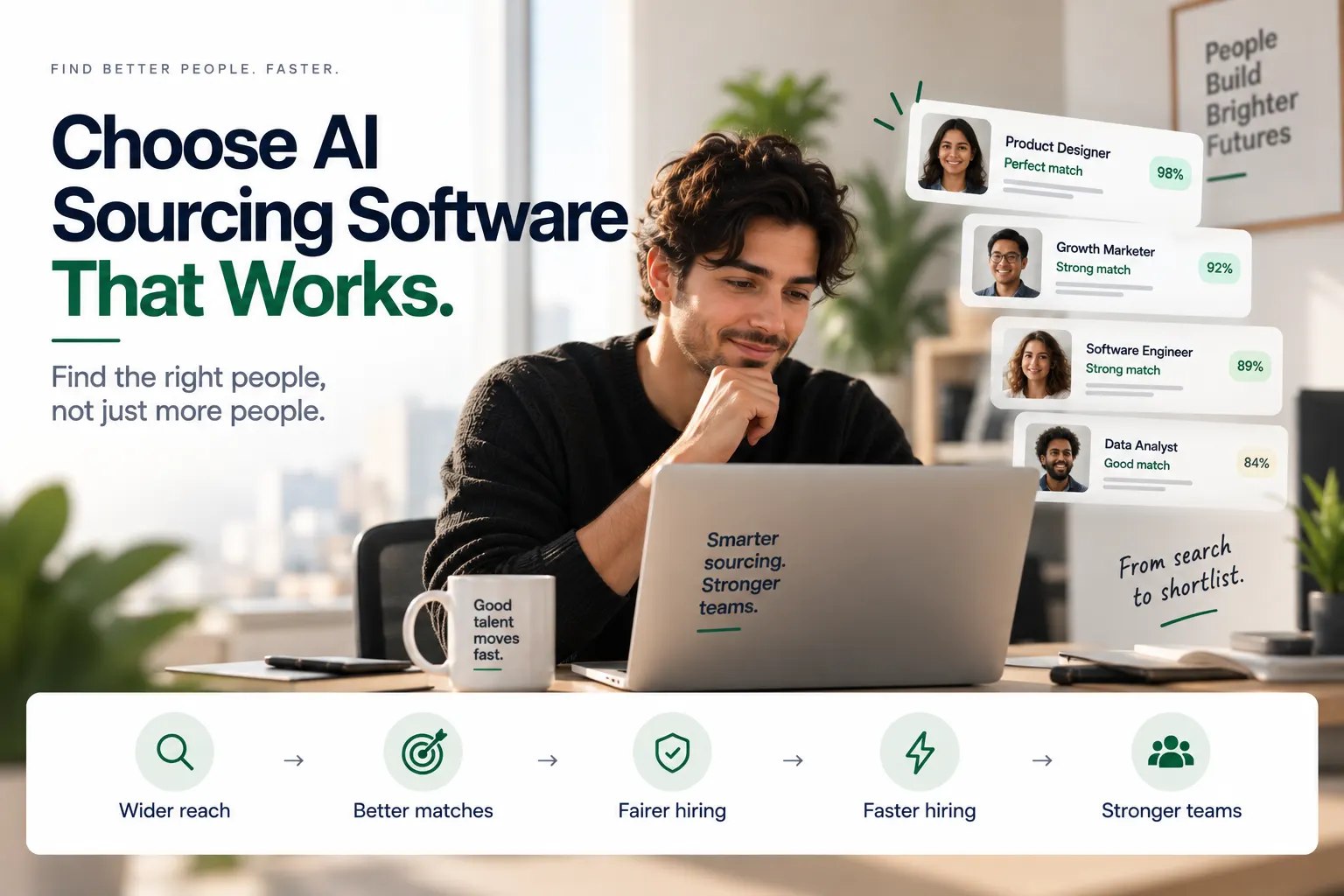
How to Choose AI Sourcing Software in 2026: A Buyer's Guide
Key Takeaways (TL;DR)
- AI sourcing software finds and surfaces candidates for your open roles, including people who are not actively applying. Choosing the right one comes down to whether it finds the right people, not just more people.
- The point of AI sourcing is reach plus relevance: a wider pool, filtered to candidates who actually fit, faster than manual searching.
- The criteria that matter most are match quality, candidate coverage, fairness, and how well sourcing connects to screening.
- The trap is a tool that floods you with volume you then have to sort by hand. Sourcing without screening just moves the bottleneck.
- The strongest setup is sourcing and skills screening in one place. Navero surfaces qualified candidates and ranks them on evidence, with a human deciding.
What is AI sourcing software?
AI sourcing software uses AI to search for and surface candidates who match a role, then helps you reach out to them. It goes beyond waiting for inbound applications by actively finding people, including passive candidates who are not looking but would be a strong fit.
The appeal is obvious in a market where the best people are rarely job-hunting. AI adoption in recruiting has climbed fast, with most teams now using AI somewhere in the process (Pin, AI adoption in recruiting), and sourcing is one of the areas where it saves the most manual effort. But not all sourcing tools are equal, and the wrong one creates as much work as it saves.
Why sourcing quality matters more than volume
Here is the mistake most buyers make: they judge a sourcing tool by how many candidates it produces. Volume is easy. Relevance is hard, and relevance is what actually helps.
A tool that surfaces 500 loosely-matched profiles has not saved you time, it has handed you a sorting job. A tool that surfaces 30 genuinely qualified people has done the work. So the real question for any AI sourcing tool is not "how many can it find?" but "how good are the matches, and how much of my time does it actually save?" Keep that front of mind as you evaluate, because vendors love to sell volume.
The main types of sourcing tool
Before you compare names, it helps to know the categories, because they solve different problems.
AI sourcing platforms. Use AI to search across sources and surface matched candidates, including passive ones, based on a role's requirements. Best when you want reach plus relevance.
Sourcing tool suites and extensions. Browser tools and databases that help recruiters find and contact candidates, often on top of professional networks. Our roundup of sourcing tools for recruiters covers this space.
Network and outreach tools. Focused on finding and messaging candidates on a specific network, useful if that is where your talent lives. See our take on LinkedIn active sourcing alternatives.
Full hiring platforms with sourcing built in. Source and then screen candidates in one place, rather than exporting lists between tools.
The right category depends on whether you just want to find more candidates, or you want to find and assess them in one flow. That second question is the one most buyers underweight.
What to look for: the criteria that matter
1. Match quality
The most important thing. The tool should surface candidates who genuinely fit the role's requirements, not just anyone with a matching keyword. Ask how it matches, and ask to see the quality of a real shortlist for one of your roles.
2. Candidate coverage and reach
Good sourcing widens your pool beyond the people already in your inbox or your local network. Check where the tool finds candidates and whether that coverage fits the roles and regions you hire for.
3. Fairness and bias control
Sourcing is where bias can enter early, if a tool over-indexes on pedigree or proxies. Look for a tool that surfaces candidates on job-relevant criteria and can explain why someone was matched, which keeps your top of funnel fair and defensible.
4. It connects to screening
This is the one buyers underrate. Sourcing that is not connected to screening just moves the bottleneck: you find more people, then still have to assess them all by hand. The strongest setup sources candidates and then ranks them on verified skills, so you go from "found" to "shortlisted" in one flow rather than exporting lists between tools.
5. Outreach and workflow
Finding candidates is only half the job. Check how the tool handles outreach and whether results flow into your existing process, so sourcing produces conversations, not just a spreadsheet.
6. Human oversight and compliance
As hiring rules tighten, you want sourcing that keeps a human in the loop and can explain its choices. A tool that autonomously filters people out with no visibility is a compliance risk. Look for transparency and a clear audit trail.
A simple process for choosing
Define who you actually need. Be specific about the skills and profile for the roles you source most. A tool is only as good as the target you give it.
Pick your must-have criteria. From the list above, choose the three or four that matter most for your hiring.
Test on a real role. Ask each vendor to source for one of your actual openings and judge the shortlist quality against your own read.
Check the handoff to screening. See how sourced candidates move into assessment. If they do not, factor in the manual work that adds.
Confirm fairness and oversight. Make sure the tool can explain matches and keeps a human deciding.
Red flags to avoid
Volume dressed up as value. A tool that brags about how many candidates it finds, without match quality, is selling you a sorting problem.
A black box. If it cannot explain why a candidate was surfaced, you cannot defend the decision or trust the matches.
No link to screening. Sourcing alone leaves you with a pile to assess by hand. Look for sourcing plus screening.
Thin coverage. If it only re-surfaces people already in your database, it is not widening your pool.
Set-and-forget automation. Sourcing with no human oversight risks both quality and compliance.
What does AI sourcing software cost?
Pricing varies widely, so confirm current numbers with each vendor, but the pattern is worth knowing. Standalone sourcing tools often charge per recruiter seat on monthly or annual plans, and some add usage-based costs for contacts or credits. Enterprise platforms tend toward custom pricing that scales with volume.
As with any hiring tool, the useful comparison is cost against value, not sticker price. A cheap sourcing tool that floods you with loosely-matched profiles has a hidden cost in the hours your team spends sorting them. A tool that surfaces a smaller, genuinely qualified shortlist, especially one that then screens those candidates, saves far more than its fee in recruiter time and faster hires. Judge it on time saved and hire quality, not the monthly number alone.
Where Navero fits
Most sourcing tools stop at "here are some candidates." Navero goes further, because sourcing and screening live in one platform. It surfaces qualified candidates with AI sourcing, then ranks them on verified skills rather than leaving you a raw list to sort. That means the reach of AI sourcing becomes an advantage instead of an overwhelming pile, because the tool that finds candidates is the same one that tells you which can do the job.
Navero filters out roughly 60% of unqualified applications and cuts time-to-hire by up to 75% (based on customer data), and it shows the reasoning behind every match and score, while a human makes the final decision. That human-in-the-loop, job-relevant design also keeps you aligned with the EU AI Act, NYC Local Law 144, and EEOC guidance as they tighten around automated hiring. For the wider process, see our guides to proven sourcing strategies and evaluating candidates.
If you are choosing an AI sourcing tool, start with the one that also screens. See how Navero turns sourcing into a shortlist you can trust.
The bottom line
AI sourcing software is worth buying, but only the kind that finds the right people, not simply more people. The whole value is reach plus relevance: a wider pool, filtered to candidates who genuinely fit, with less manual searching. Judge any tool on match quality, on how well it controls for bias, and above all on whether it connects to screening, because sourcing that stops at a raw list just moves your bottleneck one step down. Pick a tool that goes from found to shortlisted in one flow, keep a human in the decision, and sourcing stops being a volume problem and becomes a genuine speed advantage. For related reading, see how to source passive candidates.
Frequently Asked Questions
What is AI sourcing software? It is software that uses AI to find and surface candidates for open roles, including passive candidates who are not actively applying, and to help you reach out to them. It replaces slow manual searching with faster, wider candidate discovery.
How do I choose AI sourcing software? Judge it on match quality first, not volume. Check its candidate coverage, whether it controls for bias, and, crucially, whether it connects to screening so you are not left sorting a huge list by hand. Test each tool on a real role before you buy.
Is more candidates always better in sourcing? No. Volume without relevance just creates a sorting job. A tool that surfaces a smaller, genuinely qualified shortlist saves more time than one that floods you with loosely-matched profiles. Match quality is what matters.
What is the difference between AI sourcing and AI screening? Sourcing finds and surfaces candidates for a role. Screening assesses and ranks the candidates you have on their ability to do the job. The strongest platforms do both, so sourced candidates flow straight into a skills-based shortlist.
How is AI sourcing different from a job board? A job board waits for candidates to come to you, so you only reach active applicants. AI sourcing actively goes and finds candidates who match the role, including passive people who are not applying anywhere. Job boards give you inbound volume, while sourcing gives you targeted reach, which matters most for roles where the best people are not looking.
Does AI sourcing introduce bias? It can, if a tool matches on pedigree or proxies rather than job-relevant criteria. Choose a tool that surfaces candidates on the skills the role needs, can explain why someone was matched, and keeps a human in the decision.