Will AI Replace Recruiters? What the Data Actually Reveals About Artificial Intelligence and Recruiting
Key Takeaways (TL;DR)
- AI adoption is widespread but superficial: 87% of companies use AI in recruiting, yet only 18% implement it across hiring processes. Most deploy AI in isolated pockets rather than integrated workflows.
- Human judgment remains essential: Only 26% of candidates trust AI for fair evaluation. 67% believe AI lacks the nuanced judgment needed for cultural fit and leadership assessment.
- Recruiter jobs are growing, not disappearing: Bureau of Labor Statistics projects 6% growth for HR specialists through 2034—twice the national average despite accelerating AI integration.
- AI handles volume, humans handle relationships: AI processes 100 resumes in 15-20 minutes versus 10-13 hours manually. 80% of recruiters now spend more time on candidate engagement.
- Strategic advantage belongs to AI-human teams: Only 34% of teams effectively blend AI and human capabilities, creating competitive advantage for recruiters who master both domains.
The data is clear: AI will not replace recruiters. It will redefine their roles, automating routine tasks while amplifying the value of human expertise in relationship-building, cultural assessment, and complex decision-making.
Introduction
The recruiting industry faces a fundamental question: will artificial intelligence eliminate human recruiters or enhance their capabilities? The data provides a definitive answer.
87% of companies now use AI in their recruiting process, up from just 26% two years ago [8]. Yet the Bureau of Labor Statistics projects 6% employment growth for HR specialists through 2034, twice the national average for all occupations [9]. These trends are not contradictory. They reveal a transformation in progress.
AI excels at high-volume screening and administrative tasks. Human recruiters remain irreplaceable for assessment of cultural fit, leadership potential, and the nuanced judgment calls that determine long-term hiring success. The question is not whether AI will replace recruiters, but how smart recruiters will use AI to become more effective.
How Companies Actually Use AI in Recruiting Today
AI adoption in recruiting is widespread but surface-level. While 99% of hiring managers report using AI in some capacity [1], and 43% of organizations used AI for HR tasks in 2025 (up from 26% in 2024) [9], the reality is far less comprehensive. Only 18% of companies use AI broadly across hiring processes [3].
Most organizations deploy AI in isolated pockets rather than integrated workflows. This creates a fundamental gap between perception and implementation.
The knowledge deficit runs deeper than adoption rates suggest. 74% of companies report that candidates now use AI in job searches [3], yet 58% of talent acquisition leaders cannot distinguish between AI and automation [3]. Without this basic understanding, strategic deployment becomes nearly impossible.
Real AI usage clusters around specific, high-volume tasks. Screening leads adoption at 58%, followed by candidate communication at 54%, assessments at 50%, and sourcing at 46% [3]. These applications share common characteristics: repetitive structure, clear success metrics, and massive volume requirements.
The impact on recruiter roles contradicts replacement fears entirely. 80% of organizations report recruiters now dedicate more time to engaging and nurturing candidates, while 73% strengthen hiring manager partnerships [3]. Efficiency gains are measurable: 98% of hiring managers saw significant improvements in hiring efficiency using AI [1].
Yet implementation challenges persist. 67% of hiring managers seek support from staffing firms to handle AI-related hiring challenges [4]. Despite widespread adoption claims, most organizations struggle to deploy AI effectively across their hiring operations.
What AI Handles Well vs. What Still Requires Human Recruiters
The data reveals a clear division of labor between AI and human recruiters.
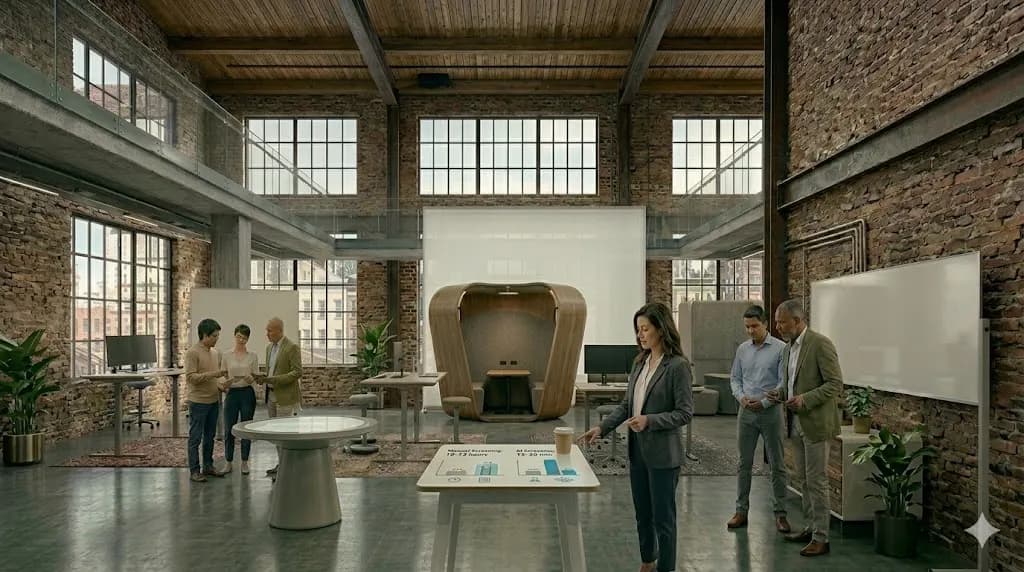
AI excels at volume-intensive tasks with measurable outputs. Resume screening processes 100 resumes in 15-20 minutes compared to 10-13 hours manually [5]. Consistency rates reach 85-95% for AI systems versus 60-70% inter-rater reliability for human reviewers [5]. Scheduling, eligibility checks, and fraud detection benefit from automation's tireless accuracy [6].
Research from the University of Chicago confirms AI's effectiveness in structured scenarios: AI-led interviews resulted in 12% more job offers and candidates were 17% more likely to remain in their positions for at least 30 days [2]. When given the choice, 78% of applicants preferred AI over human recruiters [2].
Human judgment remains irreplaceable for complex assessments. Only 26% of job applicants trust AI will fairly evaluate them [7]. Candidates recognize the limitations: 67% state that AI tools lack the nuances of human judgment [8].
AI struggles with qualities that determine long-term success. Communication style, adaptability, leadership potential, and motivation resist algorithmic assessment [9]. These dimensions remain invisible to pattern-matching systems.
Human recruiters dominate where context drives decisions. They assess transferable skills in unconventional candidates, navigate compensation negotiations, and evaluate team dynamics [9]. Behavioral interviews require real-time adaptation that algorithms cannot replicate [10]. Cultural alignment, emotional intelligence, and genuine passion demand human assessment [11].
The division is becoming clearer: AI handles the mechanics, humans handle the meaning.
What Labor Market Data Shows About Recruiter Job Security
Bureau of Labor Statistics projections directly contradict replacement fears. Employment of human resources specialists will grow 6% from 2024 to 2034, faster than the average for all occupations [12]. The field will generate approximately 81,800 openings annually over the decade [12]. HR managers face similar prospects, with 5% projected growth and 17,900 yearly openings [13].
This growth occurs alongside accelerating AI integration. 93% of talent acquisition professionals plan to expand their AI use in 2026 to meet hiring goals [14]. The apparent contradiction reveals the true market dynamic: AI creates efficiency that enables growth rather than replacing roles.
Market pressures explain this paradox. Since spring 2022, applicants per open role doubled [14], while 52% of professionals actively seek new positions this year [14]. Organizations face mounting pressure as 42% need to fill roles faster and 39% must surface candidates with skills they never found before [14].
Current adoption patterns support transformation over replacement. 65% of recruiters already deploy AI tools [14], yet 66% report finding quality talent has become harder [14]. The challenge is not volume—it's quality and fit. This is why 73% feel unprepared to manage increased organizational expectations [14].
The skills gap creates opportunity for prepared recruiters. Only 34% of teams qualify as AI power users who blend artificial and human skills effectively [14]. This minority gains significant competitive advantage while the majority struggles with implementation.
Market size projections reinforce this transformation narrative. The global AI recruitment market will grow from $661.50 million in 2024 to over $1.10 billion by 2030 [15]. Meanwhile, 82% of CEOs report AI increased or caused no change in headcount [16].
The data points to job evolution, not elimination. Recruiters who master AI tools while focusing their human expertise on relationship-building and complex judgment will find themselves more valuable than ever.
Conclusion
The data essentially settles the debate: AI will not replace recruiters but redefine their roles. Machines excel at high-volume screening and administrative tasks, while humans remain irreplaceable for assessing cultural fit, leadership potential, and nuanced judgment calls.
Organizations should view artificial intelligence and recruiting as complementary rather than competitive. The most successful talent acquisition teams will be those who master AI tools for efficiency gains while dedicating their human expertise to relationship-building and strategic decision-making where algorithms fall short.
FAQs
Q1. Will AI completely replace recruiters in the future? No, AI will not replace recruiters but rather transform their roles. While AI excels at high-volume tasks like resume screening and scheduling, human recruiters remain essential for relationship building, assessing cultural fit, evaluating leadership potential, and making complex judgment calls that require nuanced understanding and emotional intelligence.
Q2. What recruiting tasks does AI handle most effectively? AI performs best at repetitive, high-volume tasks with clear metrics. This includes resume screening (processing 100 resumes in 15-20 minutes versus 10-13 hours manually), candidate communication, scheduling, eligibility checks, fraud detection, and initial assessments. AI maintains 85-95% consistency compared to 60-70% for human reviewers in these areas.
Q3. Are recruiter jobs at risk due to AI adoption? Despite widespread AI adoption, recruiter jobs are actually growing. The Bureau of Labor Statistics projects 6% employment growth for HR specialists through 2034, which is twice the national average. The field will generate approximately 81,800 job openings annually, indicating that AI is creating job redesign rather than job elimination.
Q4. Do candidates trust AI in the hiring process? Candidate trust in AI remains mixed. While 78% of applicants preferred AI over human recruiters in one study, only 26% of job applicants trust AI to fairly evaluate them. Additionally, 67% of candidates believe AI tools lack the nuances of human judgment, particularly for assessing communication style, adaptability, and motivation.
Q5. How are companies currently using AI in their recruiting processes? 87% of companies now use AI in recruiting, with the most common applications being resume screening (58%), candidate communication (54%), assessments (50%), and sourcing (46%). However, only 18% use AI broadly across all hiring processes, with most organizations deploying it in isolated pockets rather than integrated workflows.
References
[1] - https://mindhuntai.com/blog/ai-replacing-recruiters
[2] - https://www.pin.com/blog/will-ai-replace-recruiters/
[3] - https://insightglobal.com/2025-ai-in-hiring-report/
[4] - https://blog.taleva.io/posts/ai-recruiting-statistics-2026
[5] - https://recruitingheadlines.com/new-research-finds-candidates-are-outpacing-employers-in-ai-adoption/
[6] - https://www.roberthalf.com/us/en/insights/ai-hiring-impact
[7] - https://equip.co/blog/ai-resume-screening-vs-manual-cv-screening-the-complete-roi-analysis-for-2026/
[8] - https://everworker.ai/blog/ai_vs_human_recruiters_hiring_accuracy_fairness_speed
[9] - https://www.fullstackhr.io/p/ai-outperforms-human-recruiters
[10] - https://www.gartner.com/en/newsroom/press-releases/2025-07-31-gartner-survey-shows-just-26-percent-of-job-applicants-trust-ai-will-fairly-evaluate-them
[11] - https://www.sciencedirect.com/science/article/pii/S2451958823000362
[12] - https://www.optistaffing.com/2026/03/05/the-human-advantage-why-ai-will-not-replace-recruiters-in-2026/
[13] - https://www.hrdive.com/news/human-touch-vs-ai-new-hiring-landscape/809677/
[14] - https://aicruit.ai/blog/human-screening-vs-ai-screening
[15] - https://www.bls.gov/ooh/business-and-financial/human-resources-specialists.htm
[16] - https://www.bls.gov/ooh/management/human-resources-managers.htm
[17] - https://www.hrdive.com/news/recruiters-increasing-their-ai-usage-as-pressure-to-hire-intensifies/809051/
[18] - https://www.davron.net/ai-isnt-replacing-recruiters-its-redefining-them/
[19] - https://www.forbes.com/sites/stephendiorio/2026/01/06/future-proofing-your-career-in-an-era-of-ai/